Transformation
Digital transformation without internal chaos
Transformation programs break when they chase tooling before capability. Sustainable modernization starts with how work should operate.
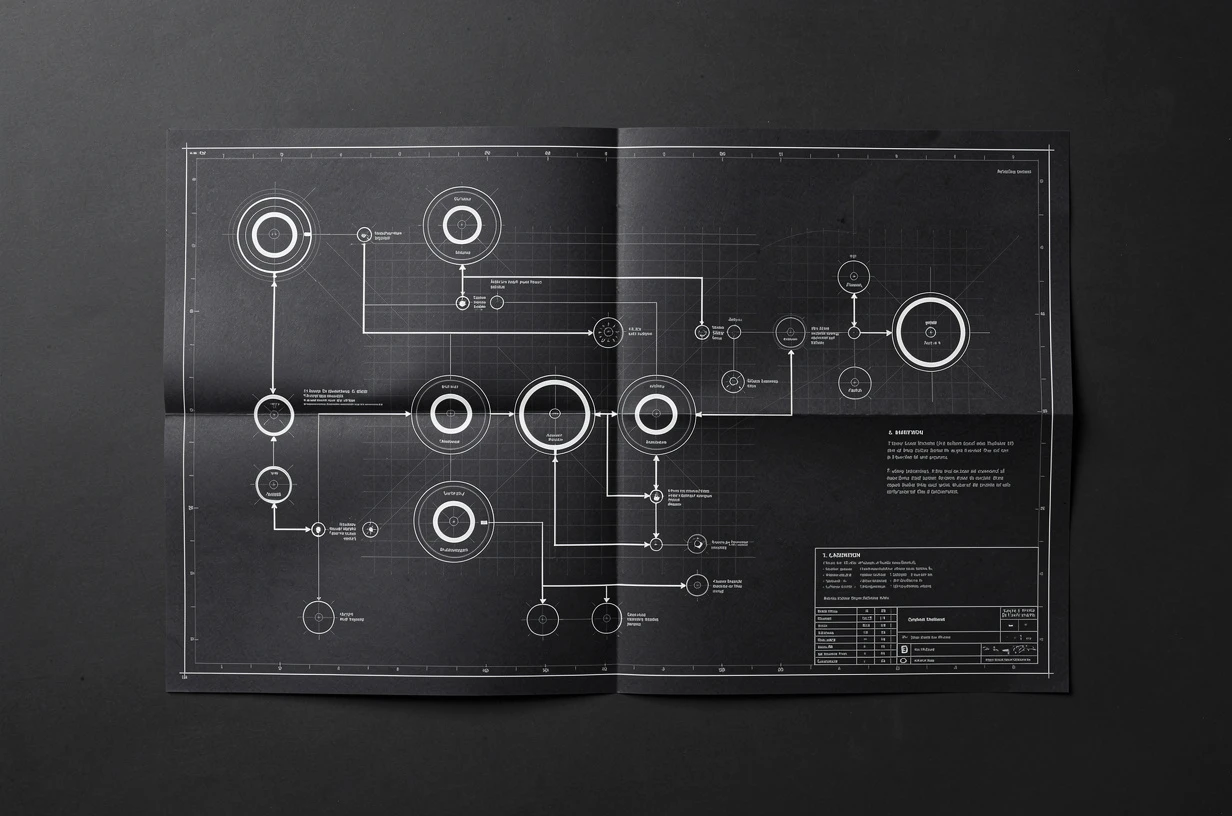
Digital transformation is often described as a technology problem. In practice, it behaves more like an operating model problem with a technical surface area.
Organizations that succeed at transformation do not do so because they selected better software. They succeed because they were clear about how work should function before they chose the tools designed to support it. Organizations that struggle do the opposite: they let vendor roadmaps and tool evaluations drive the conversation, and discover afterward that the organization was not positioned to absorb what they built.
The chaos that follows is predictable. Teams adapt partially. Workarounds accumulate. Adoption stalls. The tools get blamed, even though the tools were never the issue.
Why transformation efforts stall
Programs stall for a recognizable set of reasons. Understanding them is the first step toward designing a transformation that avoids them.
New tools introduced into old processes. The most common failure pattern. A new CRM, ERP, or automation layer is installed on top of a workflow that was not working well before the tool arrived. The tool adds complexity to the existing dysfunction without addressing the underlying cause. Teams learn the tool but not the better way of working the tool was supposed to enable.
Teams modernizing in isolation. A logistics team builds its own data model. A finance team automates its own reconciliation process. A sales team introduces its own pipeline tooling. Each team solves its local problem, but the connections between teams — handoffs, shared data, escalation paths — are never addressed. The result is a collection of point solutions that do not compose into an improved operating model.
Vendor roadmaps mistaken for company strategy. Large transformation programs often become organized around the implementation timeline of a vendor. The vendor’s scope, sequencing, and priorities define the program instead of the company’s operational priorities. When the engagement ends, the company has the tool but not the operating model it was supposed to support.
No practical plan for adoption by real operators. Transformation programs are often designed by people who will not be using the systems day-to-day. The people who will — operators, front-line managers, customer-facing teams — are consulted late, trained briefly, and left to adapt to a system that reflects assumptions about their workflow that are partially wrong.
The sequence that actually works
Sustainable transformation follows a consistent pattern: understand how work should function, then select and implement the systems that support that operating model.
That sounds obvious. In practice, it is violated constantly because tool selection is more legible than operating model design. A vendor can demonstrate a product. A roadmap can be put on a slide. A new way of coordinating work across teams is harder to make concrete, which means it gets treated as a downstream problem rather than a foundational input.
The practical sequence:
First, define the target operating model. Before evaluating any tool, describe how the key workflows should function once transformation is complete. Who owns each process? How do teams coordinate around exceptions? What data needs to be shared across which functions, and at what frequency? These answers define the requirements — not just technical requirements, but organizational ones.
Second, identify where current state diverges from target. The gap between current and target operating model is the actual transformation agenda. Some of those gaps will be closed by new tooling. Others will be closed by process redesign, role clarification, or policy change. Understanding which is which prevents over-engineering and under-scoping in the same program.
Third, prioritize by operational impact, not technical interest. The highest-priority transformation work is the work that resolves the most significant friction in the operating model. That is often not the most technically interesting work, which creates a tendency to build impressive things that do not move the metric that matters most.
Fourth, phase the implementation around adoption, not deployment. A system is not live when it is deployed. It is live when operators use it reliably without workarounds. Phasing around adoption means budgeting time for real training, feedback loops, and iteration based on how operators actually use the system — not how the design assumed they would.
Layered modernization beats grand replacement
The strongest transformation programs take an incremental approach. Rather than replacing core systems wholesale, they modernize in layers — adding visibility, removing friction, and automating where the groundwork is already in place.
A layered sequence that tends to work:
Stabilize data and workflow visibility first. Before automating anything, ensure that data about the workflow is accurate, accessible, and trusted by the teams that depend on it. A dashboard showing real process performance is more valuable in the first six months of a transformation than most automation.
Reduce the most painful coordination problems second. In most organizations, the largest source of operational waste is not individual task inefficiency but coordination failures — handoffs that break, decisions that get delayed, exceptions that get escalated to the wrong person. Addressing these problems does not always require new tools. It often requires clearer process design and explicit ownership.
Replace or extend systems where operational value is clear. Once the operating model is more stable and the data environment is cleaner, system replacement or extension becomes significantly less risky. The requirements are better understood. The operators have clearer expectations. The gaps in the proposed solution are more visible before go-live.
Add AI where it improves real decision speed or throughput. AI is most effective as a final layer in a modernization program, not a first one. When the underlying workflow is well-defined and the data environment is consistent, AI-driven recommendations, predictions, and automations can be integrated with a reasonable expectation of reliable performance. Without those foundations, AI amplifies the problems it was supposed to solve.
The organizational dimension no technology program can skip
The hardest part of any transformation program is not the technical implementation. It is the shift in how people work — which is almost always underestimated.
Operators have established habits, informal systems, and workarounds that exist for reasons. When a transformation program introduces new tooling without understanding those reasons, operators adapt by layering the new tool on top of their existing practice. The tool gets used partially. Reporting becomes unreliable because some data lives in the new system and some lives in the old workaround.
Addressing this requires more than training sessions and rollout emails. It requires involving operators in the design of the new workflow before it is built, building feedback channels for reporting when the system does not match operational reality, and treating the first three months of adoption as part of the implementation rather than as a separate phase that happens after go-live.
Change management that starts at go-live is change management that arrives too late.
What a realistic transformation looks like
A transformation program that avoids the common failure patterns is typically characterized by a few consistent features:
It starts with a clear description of the target operating model — not a technology architecture, but a description of how work should flow.
It identifies a small number of high-leverage operational problems and solves them completely before moving to the next ones, rather than making partial progress across many fronts simultaneously.
It treats adoption metrics with the same seriousness as deployment metrics. The question is not whether the system is live, but whether operators are using it without workarounds.
It builds the capability to operate the new systems internally rather than creating a permanent dependency on external implementation partners.
If you are in the early stages of a transformation program and want to assess whether the sequencing is right, the expertise page describes how strategy engagements approach this kind of diagnosis. If you have a specific operational problem to discuss, the contact page is the right starting point.